Machine Name
cat
Zoomed product photo

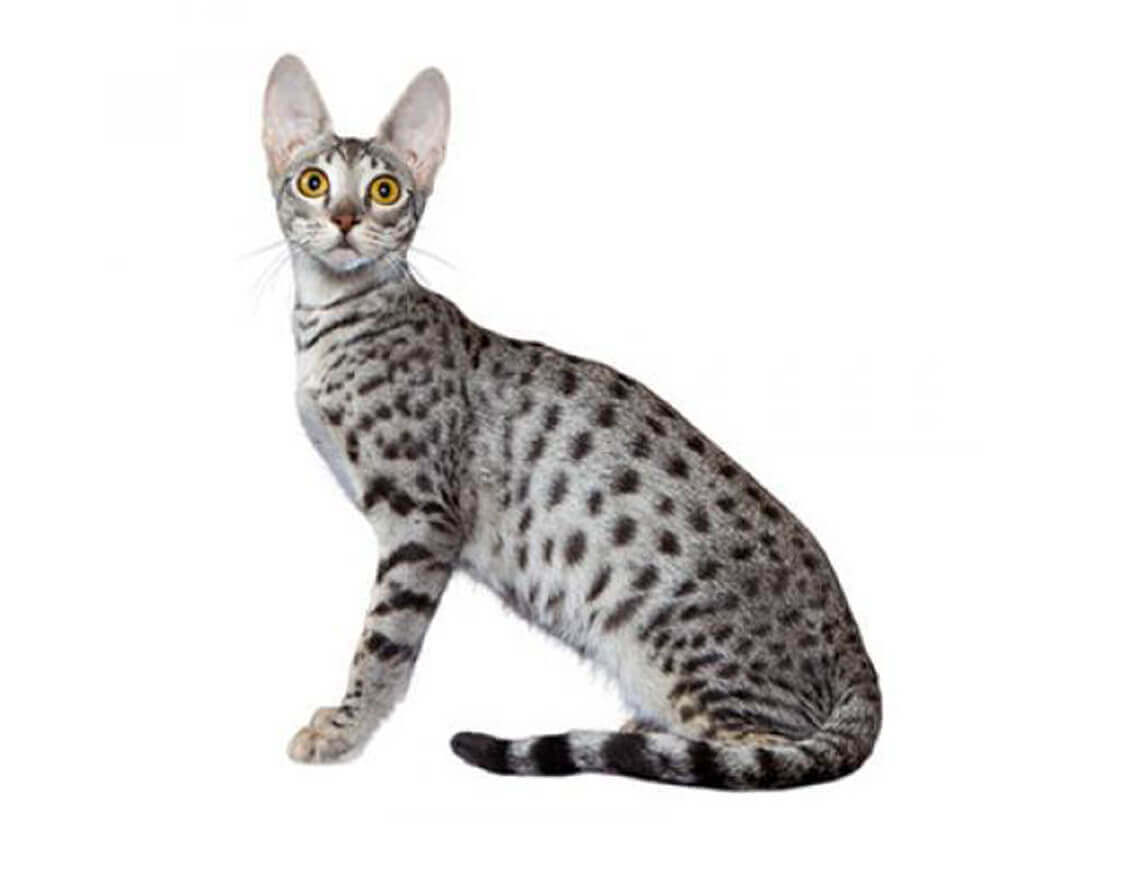
Savannah

Beautiful and unusual, the Savannah is a domestic hybrid that has the exotic look of its ancestor, the African Serval, with striking dark spots, bold markings, hooded eyes, and a short, thick tail. Known for her remarkable personality, the adventurous Savannah loves to play in water, can be trained to walk on leash and enjoys playing fetch. This affectionate cat forms strong bonds with her family and does best with daily interaction.

DID YOU KNOW? The Savannah resulted from the crossbreeding of a domestic female cat to a male African Serval. The kitten, born April 7, 1986, was named “Savannah,” from which the breed takes its name. This first-generation hybrid cross had traits of both domestic cats and African Serval.

The need-to-know

  • Highly active and inquisitive cat
  • Friendly but independent cat
  • Somehow talkative cat
  • Lean and elegant cat breed
  • Requires grooming once a week
  • Outdoor cat
  • May require familiarisation before living with children
Living Considerations
 Good for multi-pet households, not hypoallergenic
Size
Medium to large, with males and females weighing 3.5 to 11.5 kilograms
Coat
Short, slightly coarse
Temperament
 Adventurous, outgoing, affectionate
Grooming
 Weekly
Shedding
Yes
Vocalisation
Average, may hiss, chirp and meow
Personality

As Savannah cats are not common, it is difficult to generalise about their personality traits and how predictable they are. Some say they are very social and friendly with new people and other cats and dogs, while others may run and hide or revert to hissing and growling when seeing a stranger. Apparently Savannah cats can also jump very high (8ft) from a standing position and learn quickly. This is probably not a first cat. It is quite large and strong and is frequently described as 'assertive'. Savannahs are said to both 'chirp' like a Serval or meow like a domestic cat or a mixture of the two. They are also said to hiss quite loudly.

History and Origins

Country of Origin: USASavannah cats are rather controversial. They are the result of crossing a domestic cat and a Serval — a medium-sized, large-eared wild African cat. These first crosses are then bred again and the resulting cats are termed domestic. The breed began in the mid 1980s and is recognised by one of the cat fancy organisations.

Nutrition and Feeding

Every cat is unique and each has their own particular likes, dislikes, and needs when it comes to food. However, cats are carnivores and every cat must obtain 41 different and specific nutrients from their food. The proportion of these nutrients will vary depending on age, lifestyle and overall health, so it's not surprising that a growing, energetic kitten needs a different balance of nutrients in her diet than a less active senior cat. Other considerations to bear in mind are feeding the right quantity of food to maintain 'ideal body condition' in accordance with feeding guidelines and catering to individual preference regarding wet or dry food recipes.

Other Information

Health and common issues

It is too early to know whether the Savannah cat breed has any health problems as none are yet cited in the veterinary literature.

Best cat breeds for children

While this breed is not widely recognised as one of the best breeds for children, all cats are different and with the proper familiarisation may still be able to live with children.

Zoomed product photo

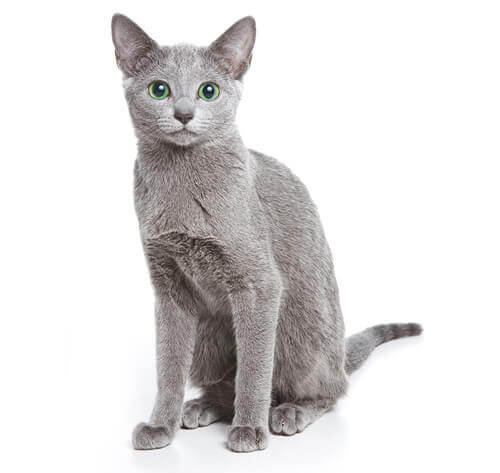
Russian Blue

The Russian Blue is easily distinguished with her emerald green eyes and silver-tipped blue coat. Though naturally shy, this feline is affectionate toward her family and gets along well with older children. Highly intelligent, the Russian Blue has been reported to open doors. This clean, quiet-mannered cat thrives in a consistent, routine environment. The Russian Blue is a healthy breed that does well when left alone for long periods.

DID YOU KNOW? The Russian Blue is believed to have descended from the royal cats of Russian czars. The breed has been known by several names, including Archangel Blue or Archangel Cat, since it is believed to have originated in Russia’s port city of Arkhangelsk on the White Sea. Other names are Spanish Blue, Foreign Blue and Maltese Blue.

The need-to-know

  • Highly active and inquisitive cat
  • Sociable and dependent cat
  • Quiet cat
  • Lean and elegant cat breed
  • Requires grooming once a week
  • Non hypoallergenic breed
  • Needs some out-door space
  • May require familiarisation before living with children
Living Considerations
 Good for multi-pet households if given time to adjust, not hypoallergenic
Size
Small to medium, with males weighing 3 to 5 kilograms and females weighing 2 to 4 kilograms
Coat
Short, dense, fine, plush
Temperament
 Reserved, sensitive, loyal
Grooming
 Yes
Shedding
Yes
Vocalisation
Quiet
Personality

Russian Blue cats are quiet and sensitive, sometimes shy and reserved but are said to be tremendously loyal to their chosen human being. They may be cautious of strangers and take time to develop a friendship with humans. Once settled in a loving environment they love to play with toys and enjoy jumping, climbing and racing around and are extremely agile and light footed.

History and Origins

Country of Origin: Russia

The Russian Blue cat was originally known as the Archangel Cat because it was said to have arrived in Europe aboard ships from the Russian port of that name (Arkhangel'sk). It has also been known as the Spanish Cat and the Maltese Cat, particularly in the US where the latter name persisted until the beginning of the century. There is, however, strong evidence linking the cat with Russia. Large numbers of cats with similar coat colours are found in Scandinavia and their dense coat is indicative of living in a northern climate. Although blue is considered the typical colour of this breed, black and white Russians are known. These colours arose during World War II when the few remaining Russian Blue cats were crossed with the British Blue and the Siamese to maintain numbers.

Nutrition and Feeding

Every cat is unique and each has their own particular likes, dislikes, and needs when it comes to food. However, cats are carnivores and every cat must obtain 41 different and specific nutrients from their food. The proportion of these nutrients will vary depending on age, lifestyle and overall health, so it's not surprising that a growing, energetic kitten needs a different balance of nutrients in her diet than a less active senior cat. Other considerations to bear in mind are feeding the right quantity of food to maintain 'ideal body condition' in accordance with feeding guidelines and catering to individual preference regarding wet or dry food recipes.

Other Information

Health and common issues

The Russian Blue cat breed seems to be healthy.

Best cat breeds for children

While this breed is not widely recognised as one of the best breeds for children, all cats are different and with the proper familiarisation may still be able to live with children.

Zoomed product photo

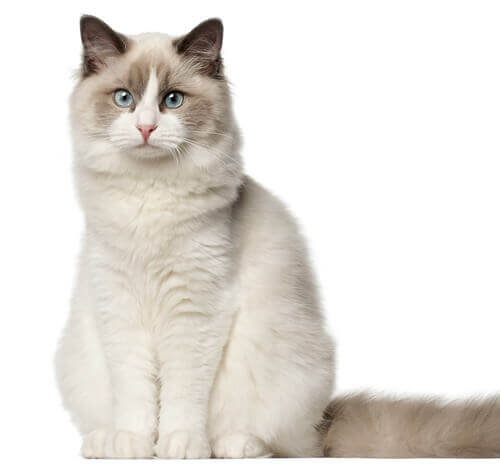
Ragdoll

The Ragdoll cat is a large, affectionate breed known for its striking blue eyes and semi-long fur. Originating in the United States during the 1960s, Ragdolls have gained immense popularity in Malaysia due to their gentle and friendly nature. These cats are often described as "dog-like" because they enjoy following their owners around and are known for their easygoing temperament. In Malaysia, Ragdoll kittens are sought after for their sociable personalities, making them ideal companions for families and individuals alike. 

Ragdolls are known for their relaxed disposition, often going limp when picked up, which is how they got their name. They thrive in a loving environment and require regular grooming to maintain their beautiful coats. With proper care, Ragdolls can live up to 15 years or more, bringing joy and companionship to their owners throughout their lives.


DID YOU KNOW? The Ragdoll originated in the early 1960s when a Persian breeder, Ann Baker of Riverside, Calif., bred a semi-feral longhaired white cat resembling an Angora to cats she found or owned. The offspring of “Josephine” had unique, endearing temperament traits that Baker selectively bred in creating the breed.

The need-to-know

  • Calm cat
  • Sociable and dependent cat
  • Quiet cat
  • Larger stockier cat breed
  • Requires grooming every day
  • Non hypoallergenic breed
  • Needs some out-door space
  • Great family cat
Living Considerations
 Good for multi-pet households, not hypoallergenic
Size
 Large, with males weighing 5.5 to 9 kilograms and females weighing 3.5 to 7 kilograms
Coat
Semi-long, plush, silky
Temperament
 Affectionate, playful, easygoing
Grooming
 Yes
Shedding
Yes
Vocalisation
Quiet
Personality

Ragdoll cats are renowned for their gentle and affectionate nature. They are sociable and enjoy being around people, making them excellent companions. Their laid-back demeanor allows them to get along well with children and other pets, which adds to their appeal as family pets.

History and Origins

Country of Origin: USA

The Ragdoll breed was developed in California in the 1960s by a breeder named Ann Baker. She selectively bred cats with docile temperaments and striking physical traits. The breed gained recognition for its unique personality and appearance, leading to its popularity across the globe.

Nutrition and Feeding

A balanced diet is crucial for Ragdoll cats to maintain their health. High-quality cat food rich in protein are recommended. Owners should consult with veterinarians to create a feeding plan that meets the specific nutritional needs of their Ragdoll, considering factors such as age and activity level.

Exercise

While Ragdolls are generally calm, they still require regular exercise to stay healthy. Engaging them in interactive play sessions with toys can help keep them active and mentally stimulated. Providing climbing structures can also encourage physical activity and exploration.

Other Information

Regular veterinary check-ups are essential for Ragdoll cats to monitor their health and catch any potential issues early. Grooming needs vary; while their semi-long fur requires regular brushing to prevent matting, Ragdolls are relatively low maintenance compared to other long-haired breeds. Additionally, owners should ensure their living environment is safe and accommodating for these gentle giants.

Zoomed product photo

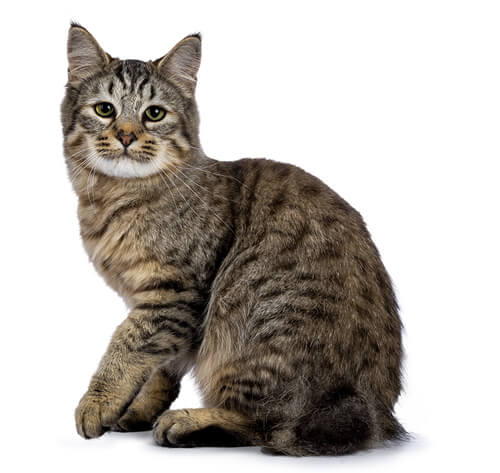
Pixiebob

Pixie-Bob cats are a large breed and resemble bobcats in many ways, perhaps the most obvious being the short tail (although the tail can be almost non-existent, through short or can even be long). The body is muscular, the face pear shaped and the ears have tufts. The woolly coat stands out from the body and has a spotted pattern on a light tan to a reddish background. Most Pixie-Bob cats have black fur and skin on the bottom of their paws, tipped ears, heavy ear hair, black lips, and white fur around the eyes but with black eye skin. Most are short-haired, but some are long-haired. Eyes are gold or greenish gold. The Pixie-Bob cat is one of the few breeds that allows polydactyl toes (extra toes) in its standards, with a maximum of seven toes.

The need-to-know

  • Highly active and inquisitive cat
  • Sociable and dependent cat
  • Somehow talkative cat
  • Larger stockier cat breed
  • Requires grooming every day
  • Outdoor cat
  • Great family cat
Personality

Pixie-Bob cats are said to be confident, social and active. Some are sociable, some more shy.

History and Origins

Country of Origin: USA The Pixie-Bob cat breed originated in the USA in the 1980s from wild looking barn cats and other cats which resemble a cross between a North American Bobcat and a domestic cat. The original kitten from the beginning of the development of the breed was called Pixie, hence the name. The breed came to Europe in 2001 but is not common.

Nutrition and Feeding

Every cat is unique and each has their own particular likes, dislikes, and needs when it comes to food. However, cats are carnivores and every cat must obtain 41 different and specific nutrients from their food. The proportion of these nutrients will vary depending on age, lifestyle and overall health, so it's not surprising that a growing, energetic kitten needs a different balance of nutrients in her diet than a less active senior cat. Other considerations to bear in mind are feeding the right quantity of food to maintain 'ideal body condition' in accordance with feeding guidelines and catering to individual preference regarding wet or dry food recipes.

Other Information

Health and common issues

There is little information on the health of the Pixie-Bob cat breed and no reported problems. Some Pixiebob cats are polydactyl – that is they have extra toes. In general encouraging extra toes in breeding is not recommended as they can cause problems.

Best cat breeds for children

While this breed is not widely recognised as one of the best breeds for children, all cats are different and with the proper familiarisation may still be able to live with children.

Zoomed product photo

Persian Long Hair

A gorgeous longhair breed with a pansylike face, the Persian looks like a fluff ball but under the coat is a muscular, sturdy body. With her sweet personality, the Persian is a charming pet for all ages. The breed features solid, bicolour, calico and tabby varieties, which include a multitude of colours and patterns. The Persian Solid may be coloured white, blue, black, red, cream, chocolate, and lilac. All have brilliant copper eyes, except the pristine white solid colour, which may be copper, deep blue or a combination of blue and copper. The Persian Bicolour features a combination of colours as well as patterns of tabby. All have brilliant copper eyes, except the silver tabby with white, which may have green or hazel eyes. The Persian Calico has a white coat splashed with vivid patches of red and black. The dilute calico is patched with blue and cream, and chocolate and lilac calicos have patches of chocolate and red or lilac and cream, respectively. The Persian Tabby, known for being extroverted and fun, comes in three patterns, classic, mackerel and patched. This breed requires daily brushing and occasional baths and should strictly be an indoor pet.

DID YOU KNOW? Though the origin of the Persian is not known definitely, the breed is believed to have come from Angora cats from Turkey crossed with other longhair cats from Persia, Afghanistan, Burma, China, and Russia. Cats from these blended lines were imported to Europe in the 1600s.

The need-to-know

  • Calm cat
  • Friendly but independent cat
  • Quiet cat
  • Average build cat breed
  • Requires grooming every day
  • Indoor cat
  • Great family cat
Living Considerations
 Good for multi-pet households, not hypoallergenic
Size
Medium to large, with males weighing 4.5 to 6.5 kilograms and females weighing 3 to 4.5 kilograms
Coat
Long, thick, glossy
Temperament
 Affectionate, loyal, sedate
Grooming
 Daily
Shedding
Yes
Vocalisation
Soft, pleasant voice
Personality

Persian Longhair cats are calm and affectionate. They are gentle and are not as active as some shorthair breeds. Generally speaking they do not mind living on their own and are quite content to be an only cat. They are quite content to sit quietly and look pretty.

History and Origins

Country of Origin: Turkey and Persia

The first documented ancestors of the Persian cat were imported in the 17th century from Persia into Italy, and from Angora (now Ankara), Turkey into France. The Persian cats were grey coated while those from Angora were white. Descendants of these longhaired cats eventually reached Britain in the 19th century. These early Persian cats were quite different from the cats that win shows today: their faces were longer, their ears larger and they had a rangier shape. Over the years selective breeding has produced the stocky body and flat faced appearance that is familiar today. The coat is not just long; it has a very thick undercoat which requires a huge commitment in terms of owner grooming – the cat cannot keep this matt-free on its own.

Nutrition and Feeding

Every cat is unique and each has their own particular likes, dislikes, and needs when it comes to food. However, cats are carnivores and every cat must obtain 41 different and specific nutrients from their food. The proportion of these nutrients will vary depending on age, lifestyle and overall health, so it's not surprising that a growing, energetic kitten needs a different balance of nutrients in her diet than a less active senior cat. Other considerations to bear in mind are feeding the right quantity of food to maintain 'ideal body condition' in accordance with feeding guidelines and catering to individual preference regarding wet or dry food recipes.

Other Information

Health and common issues

While the Persian Longhair cat may be expected to live for about ten to twelve years, it is a breed that is recognised as having a number of health problems. Because the head shape has been shortened and the face flattened, there can be jaw deformities which can lead to dental disease and potential problems with eating and drinking. Small nostrils and a soft palate which is too long can also lead to severe breathing problems. The tear ducts may not follow their natural path and so the eyes run and wet the face constantly – this can lead to skin rashes and sores on the face. The flat nature of face also increases the chances of eye disease. Persians can carry a gene that leads to kidney failure (called autosomal dominant polycystic kidney disease) through the development of cysts in the kidney. This condition was found in more than a third of all Persian and Exotic shorthaired cats in the 1990s when screening tests became available. Using screening, breeders are now working to try to eradicate the problem – always ask the breeder to show the PKD certificates for the cats used to produce your kitten. Persian cats may also have an increased incidence of hypertrophic cardiomyopathy (thickening of the walls of the heart). Like other longhaired cats, Persians are the most likely to develop fungal skin infections, such as ringworm.

Best cat breeds for children

While this breed is not widely recognised as one of the best breeds for children, all cats are different and with the proper familiarisation may still be able to live with children.

Zoomed product photo

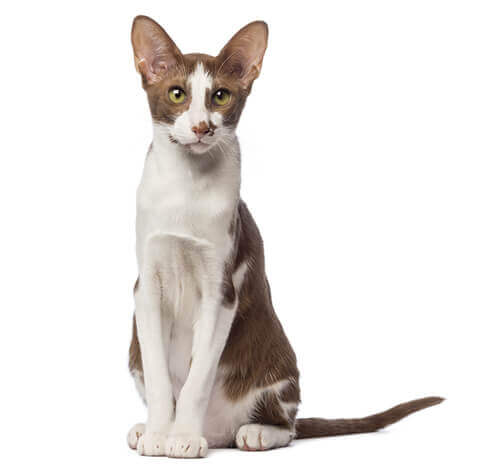
Oriental Short Hair

The Oriental Short Hair cat is a fascinating breed known for its striking appearance and lively personality. Often referred to as the Asian short hair cat, this breed boasts a sleek, muscular body, large ears, and a variety of coat colors and patterns. In Malaysia, the Oriental Short Hair has gained popularity among cat enthusiasts due to its affectionate and playful nature. Prices for Oriental Short Hair kittens typically range from RM 1,500 to RM 4,000, depending on their lineage and breeder reputation.

These cats are highly social and thrive on interaction with their owners, often forming strong bonds with their families. Their playful demeanor makes them excellent companions for children and other pets. With proper care, Oriental Short Hair cats can live up to 15 years or more, providing joy and companionship throughout their lives. Regular grooming helps maintain their short, fine coat, and they require a balanced diet to support their active lifestyle. 

DID YOU KNOW? Originating in the 1950s, the Oriental was selectively bred from Siamese. The breed has two coat varieties, shorthair and longhair, both of which can appear in litters. The Oriental longhair actually has a medium-length coat and is considered rare.

The need-to-know

  • Highly active and inquisitive cat
  • Sociable and dependent cat
  • Very talkative cat
  • Lean and elegant cat breed
  • Requires grooming once a week
  • Outdoor cat
  • May require familiarisation before living with children
Living Considerations
Good for multi-pet households, not hypoallergenic
Size
Small to medium, with males weighing 3 to 4.5 kilograms and females weighing 2 to 3.5 kilograms
Coat
Longhair — medium, fine, silky; shorthair — short, fine, glossy
Temperament
Energetic, affectionate, playful
Grooming
Monthly
Shedding
Yes
Vocalisation
 Loud
Personality

Oriental Short Hair cats are known for their friendly and outgoing personalities. They are affectionate and enjoy being around people, making them great companions. Their playful nature encourages them to engage in interactive play, and they typically get along well with children and other pets.

History and Origins

Country of Origin: USA/Britain

The Oriental Short Hair breed originated in the 1950s as a variation of the Siamese cat. Breeders aimed to create a cat with a variety of colors and patterns while maintaining the Siamese's elegant body shape and personality. The breed gained recognition in the 1970s and has since become a popular choice for cat lovers worldwide.

Nutrition and Feeding

A balanced diet is essential for Oriental Short Hair cats to maintain their health. High-quality cat food that meets their nutritional needs is recommended. Owners should consult with veterinarians to determine the best feeding regimen based on their age, weight, and activity level.

Exercise

Oriental Short Hair cats are active and playful, requiring regular exercise to stay healthy. Engaging them in interactive play sessions with toys can help keep them physically and mentally stimulated. Providing climbing structures and scratching posts can also encourage physical activity.

Other Information

Regular veterinary check-ups are crucial for Oriental Short Hair cats to monitor their health and catch any potential issues early. Grooming needs are minimal due to their short coat, but regular brushing can help reduce shedding. Additionally, owners should ensure their living environment is safe and accommodating for these lively cats.

Zoomed product photo

Oriental Long Hair

Oriental Longhair cats feature a long, lithe and elegant, Siamese-style body with a triangular wedge-shaped head and ears. The coat is long and silky, but unlike the Persian cat, there is no woolly undercoat and coat lies flat against the body and so is officially classified as a semi-longhair. The tail forms a magnificent plume. The range of possible coat colours includes everything from solid colours to smokes, tipped or tabby types. All Oriental Longhair cats have almond-shaped green eyes, except for the whites, which may have green or blue eyes, or be odd-eyed (two different coloured eyes).

The need-to-know

  • Highly active and inquisitive cat
  • Sociable and dependent cat
  • Very talkative cat
  • Lean and elegant cat breed
  • Requires grooming every day
  • Outdoor cat
  • May require familiarisation before living with children
Personality

Like all cats of Oriental type, these cats are lively and companionable. This breed is 'into everything' and always wants to know what's going on. Oriental Longhair cats are very talkative cats that can become bored easily and need plenty of attention for fun and games. These cats crave company, which is something to consider if you are out for most of the day – getting two litter mates may give them some company.

History and Origins

Country of Origin: England

Other Names: : Foreign Longhair, Angora, Madarin, British Angora

Oriental Longhair cats were originally imported from Ankara in Turkey in the 19th century and were the first longhaired cats to be brought to Western Europe. The breed disappeared when the more fully coated Persian arrived in the early 1900s. The modern Oriental Longhair cat, has been genetically recreated by breeders in the UK through crosses with Abyssinian cats (for longhair gene) and Siamese cats (for body type). A few of the original cats were taken to the USA where they were bred and are now classified as Turkish Angoras. The Oriental Longhair cat breed was formerly known as the British Angora before being renamed in 2002 by British cat fancies in order to avoid confusion with the Turkish Angora cat breed. In Europe a solid coloured Oriental Longhair cat is known as a Javanese.

Nutrition and Feeding

Every cat is unique and each has their own particular likes, dislikes, and needs when it comes to food. However, cats are carnivores and every cat must obtain 41 different and specific nutrients from their food. The proportion of these nutrients will vary depending on age, lifestyle and overall health, so it's not surprising that a growing, energetic kitten needs a different balance of nutrients in her diet than a less active senior cat. Other considerations to bear in mind are feeding the right quantity of food to maintain 'ideal body condition' in accordance with feeding guidelines and catering to individual preference regarding wet or dry food recipes.

Other Information

Health and common issues

Although most Oriental Longhair cats live long and healthy lives, there are a number of disorders that seem to be associated with the Oriental family - those similar to the Siamese cat breed as they are closely related.

Best cat breeds for children

While this breed is not widely recognised as one of the best breeds for children, all cats are different and with the proper familiarisation may still be able to live with children.

Zoomed product photo

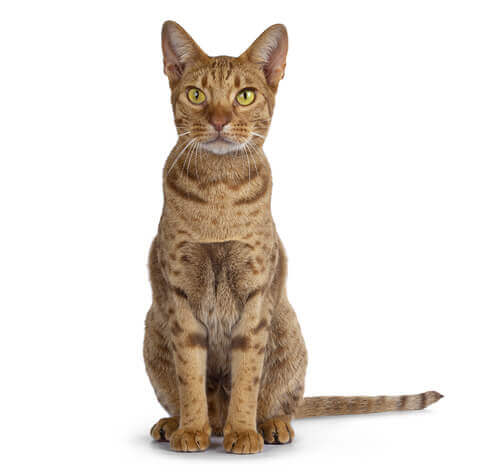
Ocicat

The Ocicat is the only spotted domestic breed selectively bred to emulate cats of the wild. This muscular, athletic breed can be trained to play fetch and walk on a leash. A people-devoted feline, the Ocicat loves companionship and doesn’t like being left alone too long. This cat does well with other cats and cat friendly dogs. A healthy breed, the Ocicat may live to be 15 to 18 years old.

DID YOU KNOW? In 1964, Virginia Daly of Berkleg, Mich., experimentally crossed a Siamese with an Abyssinian hoping to produce an Aby-point Siamese. A male kitten in the litter was ivory with golden spots and copper eyes. Daly’s daughter named the breed Ocicat because the kitten, “Tonga,” resembled the spotted wildcat. Tonga was neutered and sold as a pet. A noted geneticist at Georgia University, Dr. Clyde Keeler, wanted to see a domestic cat that mimicked wild species that were becoming extinct. At his request, the breeding of Tonga’s parents was repeated, producing another spotted male, Dalai Dotson, who became the father of the Ocicat breed.

The need-to-know

  • Highly active and inquisitive cat
  • Sociable and dependent cat
  • Very talkative cat
  • Lean and elegant cat breed
  • Requires grooming once a week
  • Outdoor cat
  • May require familiarisation before living with children
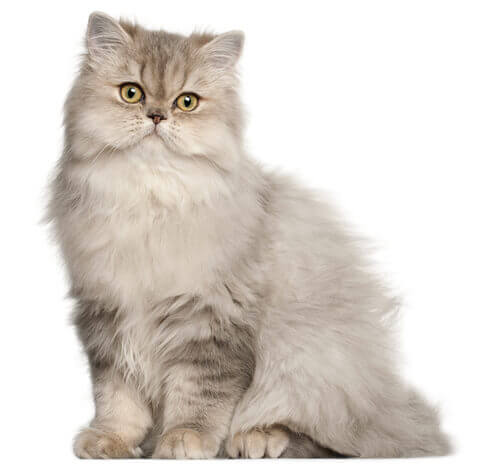
Living Considerations
Good for multi-pet households, not hypoallergenic
Size
Medium to large, with males weighing 4 to 7 kilograms and females weighing 2.5 to 4.5 kilograms
Coat
Short, smooth, satiny
Temperament
Confident, active, social
Grooming
Monthly
Shedding
Yes
Vocalisation
 Talkative
Personality

Although the Ocicat has been bred to look like a wild cat, its temperament does not reflect this. The breed is intelligent and playful, curious and friendly and can be demanding of attention. They prefer, like all active cats, to have company and are very happy with human companions but if the humans are out at work all day having two may help to provide companionship.

History and Origins

Country of Origin: USA

Other Names: : Oci

The Ocicat cat breed is a relatively new breed of cat that resulted from some experimental matings in the 1960s in America. Breeders were trying to produce an Abyssinian pointed Siamese but instead produced a kitten with an amazing coat of gold spots on an ivory background. He looked like the wild Ocelot, hence the name Ocicat. American Shorthairs were introduced into the breeding programme, which brought the lovely silver colours and strong musculature and bone. In 1988 the first Ocicats arrived in Britain.

Nutrition and Feeding

Every cat is unique and each has their own particular likes, dislikes, and needs when it comes to food. However, cats are carnivores and every cat must obtain 41 different and specific nutrients from their food. The proportion of these nutrients will vary depending on age, lifestyle and overall health, so it's not surprising that a growing, energetic kitten needs a different balance of nutrients in her diet than a less active senior cat. Other considerations to bear in mind are feeding the right quantity of food to maintain 'ideal body condition' in accordance with feeding guidelines and catering to individual preference regarding wet or dry food recipes.

Other Information

Health and common issues

There are no inherited disorders reported for the Ocicat breed at present.

Best cat breeds for children

While this breed is not widely recognised as one of the best breeds for children, all cats are different and with the proper familiarisation may still be able to live with children.

Zoomed product photo

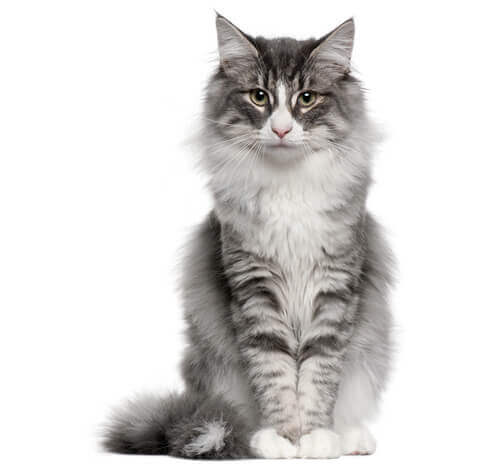
Norwegian Forest

The Norwegian Forest Cat is gorgeous, having bright emerald green eyes, a long flowing, silky coat, full mane, and magnificent 30.5 centimetre tail. This people-oriented breed is gentle and loving, including to other animals. A hardy, healthy feline that is naturally curious and athletic, the Norwegian Forest Cat is patient and not stressed easily. This breed is slow maturing, reaching full growth in about five years.

DID YOU KNOW? The cat of the Vikings, the Norwegian Forest Cat protected grain stores on land and sea from rodents. It is believed that these cats left their progeny on the shores of North America, explaining the breed’s presence on this continent.

The need-to-know

  • Highly active and inquisitive cat
  • Sociable and dependent cat
  • Somehow talkative cat
  • Larger stockier cat breed
  • Requires grooming every day
  • Outdoor cat
  • Great family cat
Living Considerations
Good for multi-pet households, not hypoallergenic
Size
Large, with males weighing 4.5 to 7 kilograms and females weighing 3.5 to 5.5 kilograms
Coat
Long, dense, glossy, smooth
Temperament
Sweet, curious, intelligent
Grooming
 Weekly
Shedding
Yes
Vocalisation
 Moderate
Personality

Norwegian Forest cats love people and thrive on human company. At times they can be very demanding of affection. At other times they appear quite independent. They are used to an outdoor life and are well adapted to roam and hunt outside and are said to be excellent climbers. They can be very rewarding companions as they are extremely friendly and playful. The breed is slow in developing and may not be mature until four years of age.

History and Origins

Country of Origin: Scandinavia

The Norwegian Forest cat is a breed believed to originate from the shorthair cats brought by the Vikings from Great Britain and longhair cats brought by the Crusaders to Scandinavia, which then mated with local farm and feral cats. The breed's origin in the cold north of Scandinavia has meant that it is well adapted to the cold winters and is rugged and hardy. The best adaptation to the climate is the double coat, which keeps out the wind and the snow and is quick drying. The breed was first recognised in Norway in 1930 and first appeared at cat shows in 1938. Norwegian Forest cats were only exported from Norway in the 1970s.

Nutrition and Feeding

Every cat is unique and each has their own particular likes, dislikes, and needs when it comes to food. However, cats are carnivores and every cat must obtain 41 different and specific nutrients from their food. The proportion of these nutrients will vary depending on age, lifestyle and overall health, so it's not surprising that a growing, energetic kitten needs a different balance of nutrients in her diet than a less active senior cat. Other considerations to bear in mind are feeding the right quantity of food to maintain 'ideal body condition' in accordance with feeding guidelines and catering to individual preference regarding wet or dry food recipes.

Other Information

Health and common issues

The Norwegian Forest cat seems to be a robust breed with no major inherited problems documented.

Best cat breeds for children

While this breed is not widely recognised as one of the best breeds for children, all cats are different and with the proper familiarisation may still be able to live with children.

Zoomed product photo

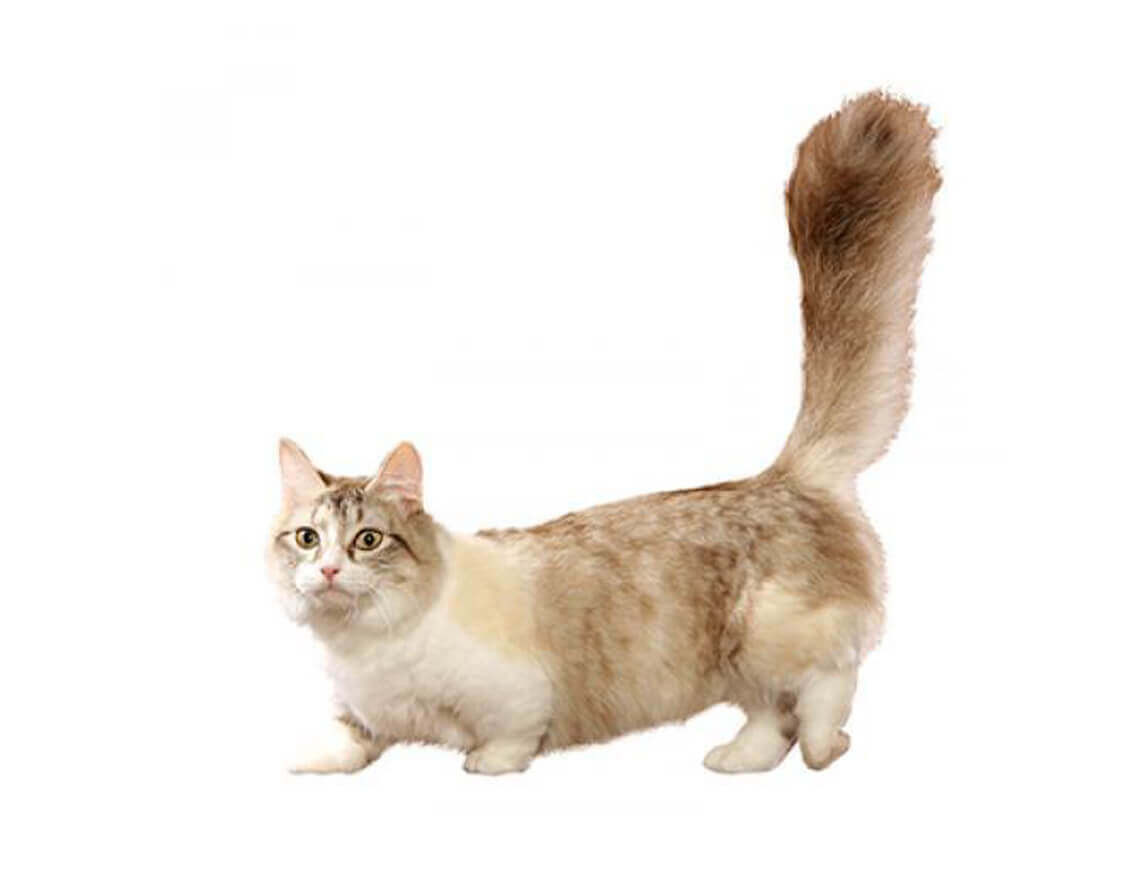
Munchkin

The Munchkin cat is a unique breed characterized by its short legs and playful demeanor, making it a popular choice among pet owners in Malaysia. These charming cats are known for their affectionate nature and sociable behavior, which endears to families and individuals alike. Munchkin kittens, with their energetic antics, often capture the hearts of potential owners.

Despite their distinctive appearance, Munchkin cats are generally healthy, although they can be prone to certain genetic conditions. Prospective owners should engage with reputable breeders to ensure they adopt a healthy pet. With their playful personalities and adaptability, Munchkin cats can thrive in various living environments, whether in apartments or larger homes. Regular veterinary check-ups and a balanced diet are essential for maintaining their health and well-being. Overall, Munchkin cats make delightful companions, providing joy and affection to their owners.

The need-to-know

  • Playful and curious cat
  • Sociable and dependent cat
  • Somehow talkative cat
  • Average build cat breed
  • Requires grooming once a week
  • Indoor cat
  • May require familiarization before living with children
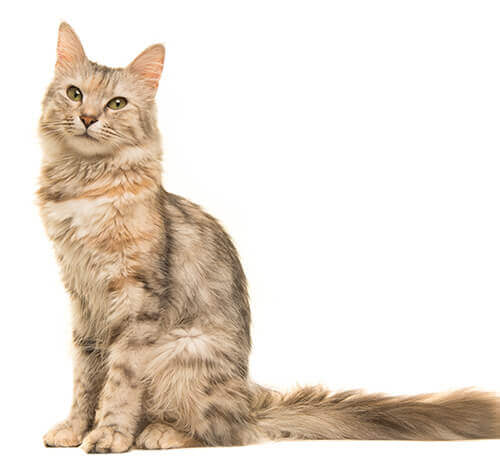
Personality

Munchkin cats are known for their playful and outgoing personalities. They are affectionate and enjoy interacting with their owners, making them great companions. Their curious nature often leads them to explore their surroundings, and they are known to be quite social, getting along well with children and other pets.

History and Origins

Country of Origin: USA

The Munchkin breed originated in the early 1980s when a Louisiana schoolteacher discovered a group of small cats with short legs. The breed gained recognition and was officially registered by The International Cat Association (TICA) in 1994. Their unique appearance and friendly demeanor have contributed to their growing popularity worldwide.

Nutrition and Feeding

A balanced diet is essential for Munchkin cats to maintain their health. High-quality cat food that meets their nutritional needs is recommended. Owners should consult with veterinarians to determine the best feeding regimen based on their age, weight, and activity level.

Exercise

While Munchkin cats are generally playful, they require regular exercise to stay healthy. Engaging them in interactive play sessions with toys can help keep them active and mentally stimulated. Providing climbing structures can also encourage physical activity.

Other Information

Regular veterinary check-ups are crucial for Munchkin cats to monitor their health and catch any potential issues early. Grooming needs vary depending on their coat type, with long-haired Munchkins requiring more frequent grooming. Additionally, owners should be aware of the breed's unique physical traits and ensure their living environment is safe and accommodating.