Machine Name
dog

Affenpinscher

Fun-loving and sometimes mischievous, the Affenpinscher is an ancient toy breed from central Europe. With the face and impish nature of a monkey, this peppy breed is extremely loyal and affectionate toward his family, though fearless toward aggressors. Ideal for apartments, his exercise requirements can be satisfied with indoor play, but he also enjoys daily walks. The Affenpinscher’s wiry, hypoallergenic coat should be brushed twice a week and trimmed twice a year.

DID YOU KNOW? Affenpinscher means "Monkey Terrier" in German. In Central Europe where he originated, the Affenpinscher was called “little devil with a moustache.”

ALSO KNOWN AS: African Terrier


The need-to-know


  • Dog suitable for non-experienced owners
  • Basic training required
  • Enjoys active walks
  • Enjoys walking half an hour a day
  • Small dog
  • Minimum drool
  • Requires grooming once a week
  • Hypoallergenic breed
  • Chatty and vocal dog
  • Not a guard dog
  • May require training to live with other pets
  • May require training to live with kids


Living Considerations
 Good with older children, suitable for apartment living, hypoallergenic
Size
Toy
Height
 24 to 30 centimetres at the withers
Weight
 2.5 to 4.5 kilograms
Coat
Short
Energy
Medium
Colour
 Usually black, but also gray, silver, red, beige or black-and-tan
Activities
 Conformation, Obedience
Indoor/Outdoor
 Both
Personality

Lively, self-confident, strong willed and fearless, yet charming and comical, it is easy to see why instead of vanishing into the melting pot of working breeds, the Affenpinscher was promoted to cherished pet! Their sparkling eyes and monkey-whiskered face are irresistible and they are very affectionate with their owners, though often a little wary of strangers.


Despite their diminutive stature, the Affenpinscher still believes he is a working terrier at times, so does require some training!


History and Origins

Country of Origin:  Germany


The Affenpinscher started out as a ratting, vermin-control dog dating back to the 17th century. Their appealing round eyes, rough coat and monkey-like expression and endearing personality quicklyearned them something of an upgrade from working dog to companion breed, which in turn led to their refinement, introduction to the show ring and their survival today. While the origins of the breed are not certain, it has been suggested that they sprung from crossing German Pinschers with imported flat-faced oriental breeds.  When the breed nearly died out are thesecond world war, the remaining few dogs were crossed with the Griffon Bruxellois to re-establish the breed and give us the appealing and enchanting breed we know today.


Nutrition and Feeding

Toy dogs such as the Affenpinscher have a fast metabolism, meaning they burn energy at a high rate, although their small stomachs mean that they must eat little and often. Small-breed foods are specifically designed with appropriate levels of key nutrients and smaller kibble sizes to suit smaller mouths. This also encourages chewing and improves digestion. Discover more about how to offer your dog a balanced diet with our easy-to-follow guide.

Exercise

Around half an hour of dog exercise will be ample, but the Affenpinscher is an active dog. If fit and healthy, will take long walks and runs, but is small enough to be carried easily if an outing proves too much. Easily entertained at home or within a small garden should the need arise, it is important to keep the Affens brain well exercised with training, puzzles and games.

Other Information

Health and common issues


The Affenpinscher dog breed is generally healthy. However, like many small dog breeds, they can suffer from kneecaps that may temporarily slip out of place (luxating patellas), a hip condition and a windpipe problem. Check the breed club for the most up to date health information.


Space requirements


Due to their tiny size the Affenpinscher can live in any size of home. A secure garden is vital as this little breed can fit through the smallest of gaps or determinedly dig under to get to wherever they want to be. As long they are well socialised and taught to ignore noise, the Affenpinscher can live in town, city or countryside.


Training affenpinscher


The Affenpinscher is clever and will enjoy dog training – and a chance to work with their owner. They are fun and easy to train and this is a breed who can easily turn their paw to trick training, mini agility and can generally have a go at most doggy sports and activities.


Best family dog breeds


Suitable for older children and teenagers, the Affenpinscher is a little too small and easily underfoot to be safe around very young children. Excellent for the quiet family, child-free homes, but caution is required around cats as the Affen does love a chase and a slap from a claw-filled paw is a high risk to those large eyes! While many dogs are traditionally thought of as being good with children, all dogs and children need to be taught to get on with each other and be safe together. Even so, dogs and young children should never be left alone together and adults should supervise all interactions between them.


Did you know?


  • In France the breed is described as the ‘diablotin moustachu’, which translates to ‘moustached devil’ which should give you some idea of the Affenpinschers character as well as their appearance!
  • In Germany the first examples of the breed were known as ‘Zwergaffenpinscher’ which literally translates to ‘little-monkey-dog’, again, a hint towards their character as well as their looks!


Vizsla

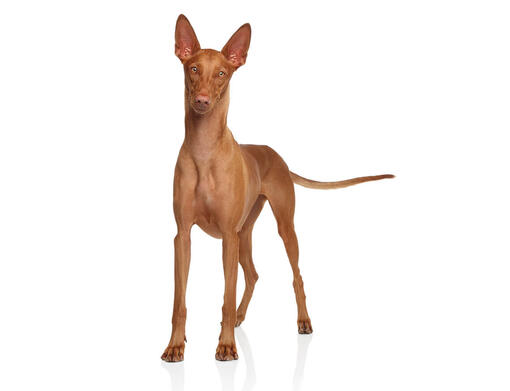
A versatile hunter from Hungary, the Vizsla is an active, energetic dog with great power, drive and determination. Lively, affectionate and tractable, the Vizsla thrives with an active family. Gentle-mannered and sensitive yet fearless and protective, the breed excels as a watch and guard dog. The Vizsla trains easily. His coat is low maintenance.

DID YOU KNOW? The Vizsla was all but extinct by the end of World War I.

ALSO KNOWN AS: Hungarian Vizsla, Hungarian Pointer, Magyar Vizsla


The need-to-know


  • Dog suitable for non-experienced owners
  • Basic training required
  • Enjoys active walks
  • Enjoys walking an hour a day
  • Medium dog
  • Minimum drool
  • Requires grooming once a week
  • Non hypoallergenic breed
  • Quiet dog
  • Guard dog. Barks and alerts
  • May require training to live with other pets
  • Great family dog
Living Considerations
Good with children, not hypoallergenic, not suitable for apartment living
Size
Medium
Height
Males – 56 to 61 centimetres at the shoulders, Females – 53 to 58.5 centimetres at the withers
Weight
Males – 20 to 29 kilograms Females – 18 to 25 kilograms
Coat
Short
Energy
High
Colour
Golden rust in varying shades with lighter shadings over the sides of the neck and shoulders
Activities
Agility, Obedience, Field Trials, Rally Obedience
Indoor/Outdoor
Both

Toy Fox Terrier

The Toy Fox Terrier has a feisty, animated personality packaged in a small, elegant, nimble body. The breed is sociable and friendly, making him a wonderful family companion. A worthy watchdog, he also is fearless, loyal and alert. The Toy Fox Terrier is easy to care for, requiring minimal exercise. Weekly brushing and occasional baths are required for his fine, satiny coat.

DID YOU KNOW? The Toy Fox Terrier originated in the 1930s to create a milder, calmer version of the Fox Terrier. This American breed was developed from crossing the Fox Terrier and various toy breeds, such as the Miniature Pinscher, Italian Greyhound and Chihuahua. The breed is commonly called the “Amertoy.”

ALSO KNOWN AS: American Toy Terrier, Amertoy


The need-to-know


  • Dog suitable for non-experienced owners
  • Basic training required
  • Enjoys gentle walks
  • Enjoys walking half an hour a day
  • Little toy dog
  • Minimum drool
  • Requires grooming every other day
  • Non hypoallergenic breed
  • Very vocal dog
  • Not a guard dog
  • Great with other pets
  • Great family dog
Living Considerations
Good with older children, not hypoallergenic, suitable for apartment living
Size
Toy
Height
21.5 to 29 centimetres
Weight
3.5 to 7 kilograms
Coat
Short
Energy
High
Colour
White and black, white and tan, white black and tan, or white chocolate and tan
Activities
Conformation, Obedience, Agility
Indoor/Outdoor
Indoor

Spinone Italiano

A versatile hunting breed, the Spinone Italiano is a robust, powerful, muscular dog known for his superior nose, soft mouth and thick, wavy coat, which protects him from extreme temperatures. In the field, he is determined and tireless, but at home, this naturally cautious dog is sweet and calm. The affectionate Spinone Italiano is happiest when near his human companions. He requires daily exercise.

DID YOU KNOW? This ancient breed originated in northern Italy as early as 500 B.C. Throughout history, the Spinone Italiano has also been called the Italian Pointer, Spinone, Italian Spinone, Italian Coarsehaired Pointer, and Italian Griffon. “Bella” and “Tris” were the first-known Spinone Italianos in the U.S. They were imported in 1931 by Dr. Nicola Gigante.

ALSO KNOWN AS: Spinone, Italian Spinone, Italian Griffon, Italian Wire-haired Pointer, Italian Coarsehaired Pointer


The need-to-know


  • Dog suitable for non-experienced owners
  • Basic training required
  • Enjoys gentle walks
  • Enjoys walking half an hour a day
  • Large dog
  • Some drool
  • Requires grooming once a week
  • Non hypoallergenic breed
  • Chatty and vocal dog
  • Not a guard dog
  • Great with other pets
  • Great family dog
Living Considerations
Good with children, not hypoallergenic, suitable for apartment living if adequately exercised
Size
Large
Height
Males – 58.5 to 69 centimetres at the withers, Females – 56 to 63.5 centimetres at the withers
Weight
Males – 32 to 36.5 kilograms, Females – 28 to 32 kilograms
Coat
Wiry
Energy
Medium
Colour
Brown-roan, orange-roan, white, or white and orange with brown or orange markings
Activities
Conformation, Obedience, Agility, Therapy, Hunting Tests, Tracking, Field Trials
Indoor/Outdoor
Both

Silky Terrier

The friendly, lively Silky Terrier has a true terrier temperament with a zest for life. Originally bred to hunt vermin, this dog is quick and alert with a long, moderately low set body. He is playful, inquisitive and eager to please, making him an exceptional companion. The Silky Terrier requires little exercise but enjoys an occasional game of fetch or an outdoor walk. His fine, smooth coat must be brushed and bathed regularly.

DID YOU KNOW? In the 1800s, Yorkshire Terriers from England were imported to Australia and bred to Australian Terriers to improve the Australian Terrier’s coat colour. The end result was a type of dog known today as the Silky Terrier

ALSO KNOWN AS: Australian Silky Terrier, Silky


The need-to-know


  • Dog suitable for non-experienced owners
  • Basic training required
  • Enjoys gentle walks
  • Enjoys walking half an hour a day
  • Little toy dog
  • Minimum drool
  • Requires grooming daily
  • Non hypoallergenic breed
  • Chatty and vocal dog
  • Not a guard dog
  • May require training to live with other pets
  • Great family dog
Living Considerations
Good with older children, not hypoallergenic, suitable for apartment living if adequately exercised
Size
Toy
Height
23 to 25 centimetres
Weight
4 to 5 kilograms
Coat
Puffy double coat
Energy
Medium-long
Colour
Black and tan, blue and tan, blue-silver and tan, grey and tan, silver and tan, or silver-black and tan
Activities
Conformation, Agility, Earthdog Trials
Indoor/Outdoor
Both

Shiba Inu

The bold, spirited Shiba Inu is a Japanese breed originally developed to hunt birds and small game on mountainous terrain. His small, dense body is marked by prick ears and a curled tail on a stunning soft, thick double coat, which should be brushed regularly. Independent, loyal and affectionate, he excels as a watchdog and companion. Moderate exercise from leash walks or in a fenced yard is a must for this active, agile breed.

DID YOU KNOW? In Japanese, the word “shiba” means “brushwood,” describing the breed’s hunting grounds, while “inu” means “dog.” The Shiba Inu is commonly referred to as the “Little Brushwood Dog.”

ALSO KNOWN AS: AJapanese Shiba Inu, Japanese Small Size Dog, Shiba Ken


The need-to-know


  • Dog suitable for non-experienced owners
  • Basic training required
  • Enjoys gentle walks
  • Enjoys walking half an hour a day
  • Small dog
  • Minimum drool
  • Requires grooming once a week
  • Non hypoallergenic breed
  • Chatty and vocal dog
  • Not a guard dog
  • May require training to live with other pets
  • Great family dog
Living Considerations
Good with children, not hypoallergenic, suitable for apartment living if adequately exercised
Size
Small
Height
Males – 37 to 42 centimetres, Females – 34 to 39 centimetres
Weight
8 to 10 kilograms
Energy
Medium
Colour
Black and tan, cream, red, or red sesame with white markings
Activities
Conformation, Agility, Hunting, Tracking
Indoor/Outdoor
Both