Health and common issues
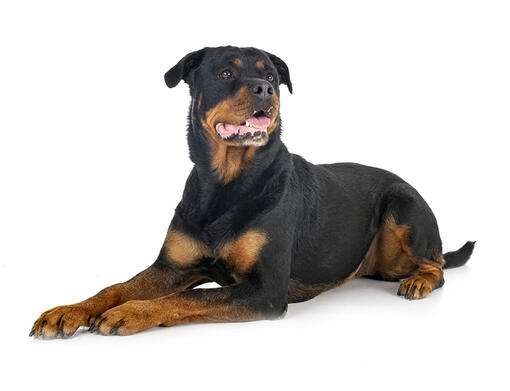
In common with many large breeds the Rottweiler dog may suffer from a specific stomach condition (gastric dilation volvulus) and hip dysplasia (a condition that can lead to mobility problems). Hip scoring of dogs prior to breeding is therefore important.
Space requirements
This is a large, active dog, who needs plenty of indoor and outdoor space, and a well-fenced garden. As he can guard territory from visitors, dog-free access to your front door or letter box for deliveries is important.
Training rottweilers
The Rottweiler is a powerful, active working dog and as such he needs an experienced, firm but fair, owner to make sure he gets all the socialisation and training he needs to be a safe and friendly member of society. With the right owner, they can be trained to a very high standard, excel in canine sports or blossom with a job to do – in other words be an unbeatable dog. But the amount of work needed to keep them mentally and physically stimulated, and adequately socialised, makes them high maintenance dogs for expert owners.
Best family dog breeds
Not an ideal family dog as while he is usually devoted to his own children, he can easily mistake the intentions of their friends. Plus, in his clumsiness, he can knock over small children. With training and socialisation, the Rottweiler may be able to live with older sensible children. While many dogs are traditionally thought of as being good with children, all dogs and children need to be taught to get on with and respect each other, and be safe together. Even so, dogs and young children should never be left alone together and adults should supervise all interactions between them.
Did you know?
While often the subject of bad press, Rottweilers can make fabulous working dogs and can excel in a variety of jobs. For example, Gunner, a search and rescue Rottweiler received the AKC Hero Dog Award for his lifesaving work at the World Trade Centre disaster in New York.